My Experience with The Legend of Zelda: Breath of the Wild
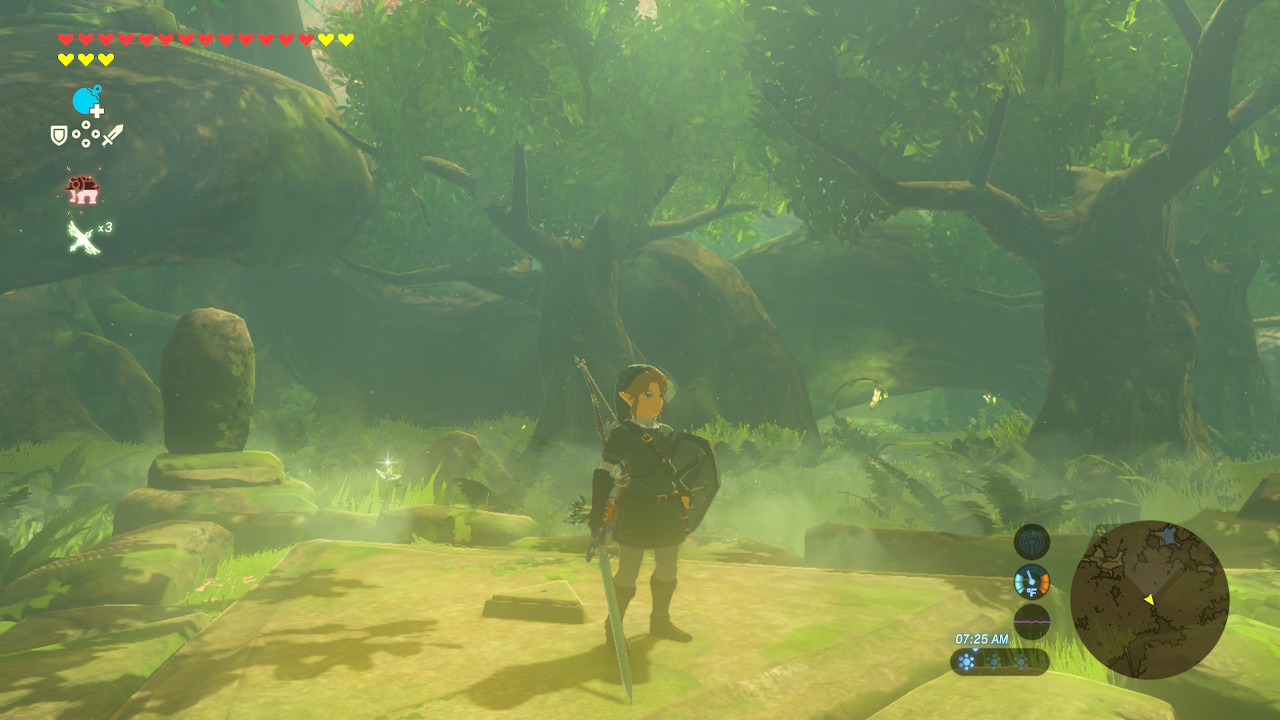
When I got my Switch in 2019 I also got The Legend of Zelda: Breath of the Wild. I am a huge Zelda fan. However, the reviews and description of some of the gameplay had me worried. I was cautiously optimistic as the game began. A voice woke me up and led me out of the cave into the landscape of Hyrule. I did not know what was going on, but I saw a man nearby. I made my way through the waypoints at the beginning of the game, and stopped playing after 45 minutes. I was not having fun. My weapons, mostly twigs and rusty weapons at this point, kept breaking. My experience felt nothing like Zelda. Breath of the Wild presented too many options to me, and I felt overwhelmed.
Even though Breath of the Wild left a bad taste in my mouth, I kept tabs on what random people thought of the game. Many said to go into the game blind. They also said it ruined other open world games for them, because of how good it is. I just did not see how they could think all of that, but I recently gave it another shot.
I was going to be on a plane for several hours, and I decided to only bring my Switch and Breath of the Wild for entertainment. No books. No music. It would have my full attention whether I liked it or not. I looked up a few things on https://beforeiplay.com. I followed its recommendation to stick to the main story quests until I got to Hateno Village before exploring the rest of Hyrule.
Between the Stockholm syndrome and a sense of direction I started to enjoy myself. I started to see the positives. The game is absolutely gorgeous. The art style is the best of the series, and will age incredibly well. Although the overall soundtrack takes a dip in quality from previous Zelda games, the music perfectly fits the tone of the world. The music was subtle and hung in the background while I explored the world. It only came alive during epic battles. If I am chilling and listening to Zelda soundtracks, I would choose Skyward Sword or Wind Waker before Breath of the Wild. However, the music in Breath of the Wild nails the atmosphere of the moment-to-moment gameplay.
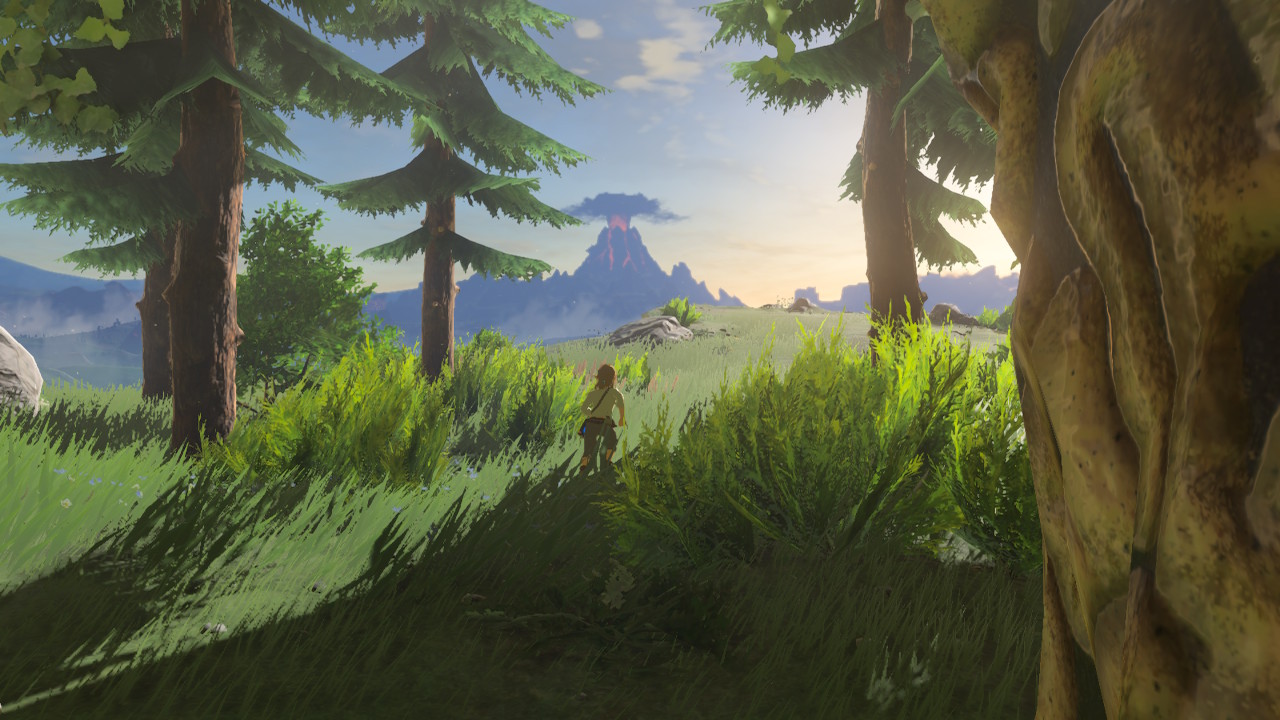
The sense of exploration is epic. As long as I had the stamina, potions, and equipment I could go anywhere I could see – unless it was raining. I encountered so many sights like lost statues, dragons, and huge skeletal remains just by wandering around. They show the story of events in the past without telling. Along the way I felt the need to talk to every single person I met. They all had something to say, either about the area, about themselves, or about a nearby treasure. I never left an encounter feeling like I wasted my time talking to them.
The story in Breath of the Wild is a highlight in the series. Link wakes up confused, which translated to me as the player. This was frustrating for me in the beginning, but I grew to appreciate it as I discovered his memories. He was suffering from memory loss, and needed to figure out what happened to Hyrule and how to save it. It works really well with the open world concept. The character Zelda in the game is my favorite Zelda of the entire series. She is relatable. She is sixteen/seventeen years old and all she wants to do is study ancient technology in order to defend Hyrule. However, her father wants her to tend to her duties to fulfill a prophecy. Should she do what she needs to do, or what she wants to do? Both options had pros and cons. I only wish the voice acting was better. Some of the dialog and acting feels like it is ripped from a cheesy anime. Overall, I enjoyed the story and the characters.
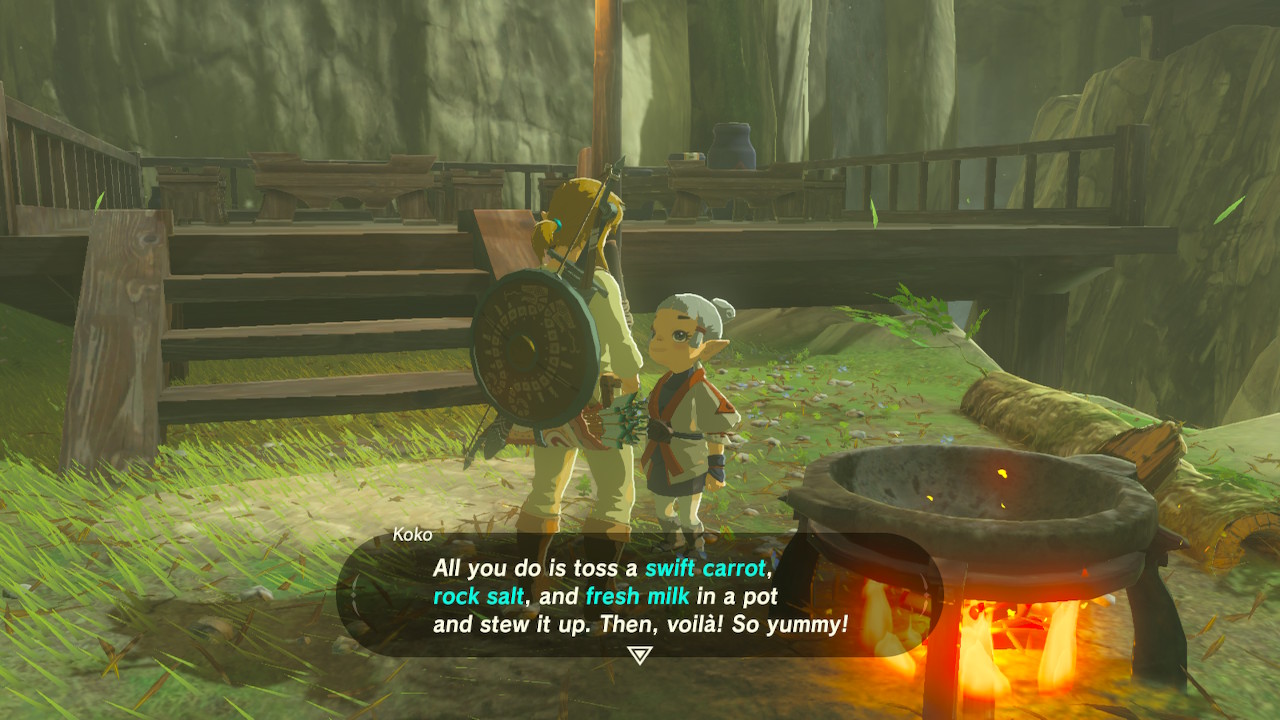
I have a huge gripe with the stamina bar in Skyward Sword. It is a worthless mechanic. It cannot be upgraded, so every stamina-based challenge is the exact length it needs to be for the stamina bar. Running drains the stamina bar far too fast, which makes traversing the world an annoyance. In Breath of the Wild, I still have the complaint that it drains too fast while running, but at least they made it so it can be upgraded. Recipes helped refill my stamina, and some gave me a temporary boost. It is a well implemented mechanic when it comes to climbing, paragliding, and firing a bow in mid air.
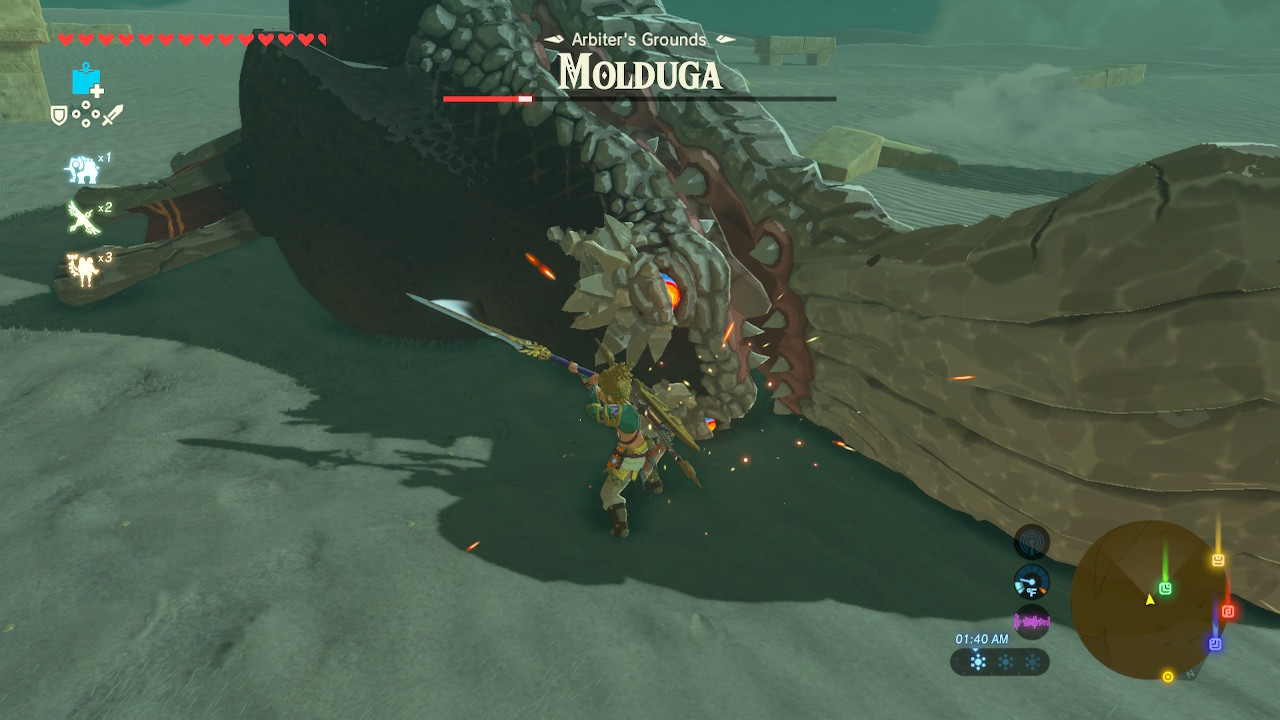
Breath of the Wild has dozens of weapons. Weapons break, and they are everywhere. Each weapon type has its purpose. Two-handed swords and clubs do more damage, but are slower. They are good for bigger enemies, like Moblins. Spears do not do a lot of damage, but are quick. They are good for faster enemies like the Lizalfos. It was important to have various weapon types on hand just in case I encountered certain enemies on my adventure. I have mixed feelings about the weapon durability mechanic. At first, I found it frustrating, because I only had access to weak weapons and they were scarce. After the game opened up, I started to have the opposite problem. I ran out of inventory space to hold all of the weapons I found. It also caused a different problem. I started sparingly using the better weapons. I did not want them to break. It was a problem I wish I did not have to worry about. The game generously doles out great weapons, so I did not need to be a hoarder. It almost feels like a worthless mechanic, but it did encourage me to use a lot of different weapons and tactics.
I hate the grinding in Breath of the Wild. Previous Zeldas had me grinding for hearts, sea shells, and other collectibles. However, I only spent a few hours on those. In Breath of the Wild, the grind is too much. Almost 450 Korok seeds are needed to upgrade to the maximum number of inventory slots for weapons and shields. Luckily, there are around 900 scattered all over Hyrule. I wanted those weapons slots unlocked, so I spent a lot of time early in the game looking for those seeds.
The grind continued with obtaining armor. To survive in various environments, I needed certain armor sets that gave resistances to specific elements. For example, if I wanted to survive in cold areas, I needed the armor that made me resistant to cold. I needed these armor sets to explore the world. They were found in shops, and cost thousands of rupees. I spent a lot of time grinding for rupees. Completing side quests and selling food was the best way to do this for me. For the food, I killed every animal I came across, cooked up some meat skewers, and sold them for a few hundred rupees. It took a long time for each armor set. I did not like it.

The final grind is upgrading the armor sets. Upgrading armor provides cool benefits. For example, the cold resistant armor when upgraded makes Link immune to getting frozen by attacks. It is not necessary, but extremely beneficial. Most ingredients are easy to find, but some can be a slog. The worst ingredients I went for were ancient parts. They were mainly found from killing Guardians, which have a ton of health. Higher level upgrades require super rare ingredients like star fragments and dragon parts. The completionist in me wanted to fully upgrade every piece of armor after beating the game, but I just did not have it in me to grind that much for no substantial reward.
To me, a Zelda game has a certain gameplay loop. Explore the overworld, find a dungeon, explore the dungeon, get a new item, beat a few bosses, and explore the overworld with your new item. Repeat until the final boss is dead. Breath of the Wild does not follow the classic loop. There are only four dungeons, and they are lackluster compared to previous games in the series. There are 120 shrines, which act as mini dungeons that last a couple of minutes at most. Although they can be fun, they are not a substitute for full dungeons. There are a handful of runes, which act as special items. However, I got them all within the first couple of hours in the game.
Instead, Breath of the Wild’s gameplay loop is all about exploration. With the dungeons being lackluster, the overworld is the true star of the game. Shigeru Miyamoto, the creator of Zelda, would probably call Breath of the Wild the most Zelda game in the series. In an interview, he talked about how the first Legend of Zelda is inspired by his experiences hiking and exploring the outdoors during his childhood. Here’s the quote:
There’s a place near Kobe where there’s a mountain, and you climb the mountain, and there’s a big lake near the top of it. We had gone on this hiking trip and climbed up the mountain, and I was so amazed — it was the first time I had ever experienced hiking up this mountain and seeing this big lake at the top. And I drew on that inspiration when we were working on the Legend of Zelda game and we were creating this grand outdoor adventure where you go through these narrowed confined spaces and come upon this great lake.
Shigeru Miyamoto. “Shigeru Miyamoto On The Origins Of Nintendo’s Famous Characters.” NPR, 2015
I had so many experiences like this in Breath of the Wild. The exploration in earlier Zelda titles are simple in comparison. Nintendo was finally able to capture Miyamoto’s childhood experiences.
Breath of the Wild seems like a line in the sand for the Zelda series. I do not know if we will ever get a Zelda game that follows the classic gameplay loop. It seems clear to me that Breath of the Wild is the future of Zelda games. To me, Breath of the Wild is a great game. However, I see it as a bad Zelda game.